
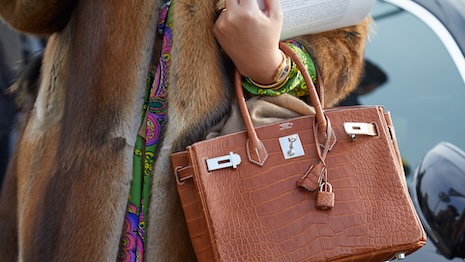
 Hermès consistently earns the loyalty of its customers and attracts new and repeat business because of its emphasis on creativity, craftsmanship and product quality. Image credit: Shutterstock
Luxury marketers and professionals planning for the coming year have to gird themselves for both opportunities and challenges in the business, requiring dexterity and knowledge that comes with experience and daring.
For those seeking a larger share of serving the affluent and wealthy, they will have to monitor the 4C’s: consumers, companies, categories and countries. It’s not just enough extrapolating trends through a single lens, but adopting a holistic approach to understanding the needs and wants of multiple generations of HNW and UHNW consumers.
Let’s start with consumers. What do we see on the horizon? More wealth creation, both in the number of centi-millionaires and billionaires. More multi-generational wealth transfer, first to spouses and then to children. Average wealth creation with women is now twice that of men in the billionaire. More self-made billionaires. More migration across the globe to safer havens for wealth generation and management as well as lifestyles. Greater expectation of privacy and gated-community mentality. The wealthy will be comfortable, while the aspirational class will continue their Sisyphean road back to consumption.
In terms of companies, expect LVMH and Richemont to return to strong growth. What helps them is financial rigor, great retail presence and experiential theatre, economies of scale due to their girth, control of raw materials, a reliable talent pool and continuous marketing that generates desire. Kering will continue its uphill battle with Gucci as the brand attempts to regain its identity. Hermès is secure, relying on product quality, craftsmanship, creativity and the long-term loyalty of its customers. Chanel, Giorgio Armani and its ilk will chug along, while independents will have to roll up their sleeves once again simply to be heard in the luxury market that is increasingly homogenized in experiences and conglomeratized in share of wallet.
Punting on the categories is slightly more dicey. If the war clouds clear, the mindset shifts to loftier thoughts, pleasurable experiences and more positive actions. The luxury conglomerates are deeply vested in ensuring that the standard pillars deliver healthy returns as the global wealthy class seeks more products and experiences commensurate with their station in life. Hence more love and marketing for categories such as fashion and leather goods, watches and jewelry, beauty and retail. Travel and hospitality will see a likely bump in the upper end of the market. The car market will work harder to regain its footing, while jets and yachts continue their soaring trajectory, reliant as they are on the 1 percent and 0.1 percent – that end where the wealth generation is growing by leaps and bounds, thanks to frothy stock markets. Luxury retail stores will proliferate worldwide, with the bigger brands locking in more desirable leases. Ironically, luxury department stores will face even more intense competition from mono-brand stores and ecommerce in the United States. Luxury real estate will continue its upward trajectory as prices soar with limited inventory in key markets. The emphasis on wellness and wellbeing will grow, appealing to the aging boomer and Gen X segments and the new-rich Gens Y and Z – not really good news for the wines and spirits category, which needs to up its creative appeal and work on more celebratory angles.
Finally, the situation with countries: the United States and China will continue their reign as wealth generators, but so will key regions such as the Middle East and Western and Northern Europe show promise. Wealth creation in India will soar, buoyed by innovation and stock market-driven gains. Expect wealthier and affluent Indians to travel more to the UAE, Southeast Asia and Europe. The opportunity for luxury real estate in the afore-mentioned markets is tremendous, especially for branded residences. The Chinese will likely open up to more overseas travel if the economy regains its momentum, thus aiding sales beyond its backyard of South Korea, Japan and Southeast Asia. The return of the Russian buyer is eagerly awaited worldwide, but can’t be declared for the obvious reasons: the unresolved and unrelenting Ukraine war. Migration among the wealthy classes is a noticeable trend, with those in Europe, Middle East and Africa moving for tax and geopolitical reasons, while seeking a better quality of life is the prime motivator for the well-heeled in Asia Pacific.
OF COURSE, another regional or global war, stock market meltdown caused by a wipeout of AI company valuations or pandemic could upend these trends and forecast. But one thing is undeniable: the rate of wealth creation globally is the highest it’s ever been. And for that reason, luxury marketers and retailers must seize the moment to earn the trust, and, resultantly, the attention and business of the affluent and wealthy.