
 The launch in November 2025 of French retailer Galeries Lafayette in Mumbai – a 90,000-square-foot flagship in the city’s Kalaghoda district featuring more than 250 brands – represents the next evolutionary step in India’s luxury landscape. Image credit: Galeries Lafayette
By Abhay Gupta
India’s luxury market is entering a historic inflection point.
For decades, the narrative was simple: imported brands, aspirational consumption and a patchwork of retail touchpoints that only reached a small fraction of high-net-worth individuals.
Today, India is no longer a passive consumer market for global maisons. It is being actively shaped by the strategic ambitions of its largest homegrown conglomerates.
Tata, Aditya Birla and Reliance are not simply investing in luxury – they are constructing the architecture for a sustainable and global-ready luxury ecosystem.
The Custodian, the Bridge and the Disruptor: Three paths to India’s luxury future
These conglomerates operate with different DNA: heritage custodianship, premium-bridge builders and scale disruptors. Yet share a unified goal: to redefine luxury in India, not just for elite consumption, but as cultural capital, ecosystem infrastructure and global relevance.
Viewed through a strategic lens, Tata functions as the custodian, preserving and amplifying heritage. ABFRL (Aditya Birla) acts as the bridge, connecting Indian design and craftsmanship to global luxury formats. And Reliance plays the disruptor, leveraging scale, real estate and integrated platforms to accelerate India’s luxury market evolution.
Tata Group: The custodian of heritage and premium ecosystem
The Tata Group’s approach to luxury is deeply anchored in legacy and trust.
The 2008 acquisition of Jaguar Land Rover symbolized India’s capability to steward a global luxury icon.
Tata’s hospitality arm, through the Taj Hotels, continues to define Indian luxury hospitality standards by blending cultural rootedness with world-class service.
Beyond these marquee investments, Tata has systematically built India’s “everyday luxury” ecosystem.
Whilst with its Zara joint venture, Tata created an elevated fashion distribution network, Titan has helped create a watch portfolio that spans aspirational entry points to ultra-luxury pieces.
Tanishq and Zoya, on the other hand, have established premium jewelry platforms that blend craftsmanship with scale. These brands function as foundational steps that ladder consumers toward higher-ticket luxury.
The Starbucks India partnership – via Tata Starbucks – represents another dimension of premium lifestyle engagement. It is not merely a food-and-beverage venture. It cultivates premium urban consumption habits, social rituals and service expectations that naturally reinforce India’s luxury mindset.
By creating habitual exposure to curated, high-quality experiences, Tata nurtures the very consumer base that sustains larger luxury investments.
In the digital arena, Tata CLiQ Luxury has emerged as a sophisticated marketplace for high-ticket products.
Partnerships with Bulgari, TimeVallée and Indian fashion designer Sabyasachi exemplify Tata’s strategy of combining heritage, exclusivity and technology.
Collectively, these moves reinforce Tata’s expanded role: it is not just a custodian of iconic brands but an architect of premium consumer infrastructure that bridges aspiration with accessibility, tradition with modernity.
Aditya Birla Fashion & Retail: The bridge between Indian craft and global luxury
The Aditya Birla Group has taken a methodical, sequenced approach to luxury. Its multi-brand platform The Collective was India’s pioneering experiment in curated luxury retail, bringing together a range of premium international and Indian labels under one roof.
This initiative established a replicable model that extended beyond the largest metro markets to Tier-II cities, democratizing access to luxury while maintaining curation and service standards.
Building on The Collective, ABFRL has strategically invested in homegrown designers such as Sabyasachi, Tarun Tahiliani, Shantnu & Nikhil and House of Masaba, professionalizing their operations and scaling production, marketing and distribution. This creates an ecosystem in which Indian design is export-ready and globally relevant, while simultaneously building consumer confidence in local luxury.
 French retailer Galeries Lafayette opened its first department store in India in Mumbai's Kalaghoda district known for its art, fashion, culture and food scene. Image credit: Galeries Lafayette
The launch in November 2025 of French retailer Galeries Lafayette in Mumbai – a 90,000-square-foot flagship in the city’s Kalaghoda district featuring more than 250 brands – represents the next evolutionary step in India’s luxury landscape.
This project translates ABFRL’s multi-brand expertise into a world-class department store experience, integrating global curation with Indian sensibilities. It signals that India is now capable of hosting landmark luxury destinations that rival Paris or Dubai, while creating a platform for both international and domestic designers to flourish.
ABFRL’s strategic lens emphasizes bridging aspiration with access, ensuring that luxury is not confined to elite consumption but is supported by a structured ecosystem that encourages discovery, confidence and repeat engagement.
As a result, ABFRL plays a dual role: it introduces Indian consumers to global luxury while professionalizing and scaling indigenous brands for global relevance. That move fundamentally re-positions India from a satellite import market to a curated global-luxury node.
Reliance Industries: The disruptor of scale and experience
Reliance Industries’ approach to luxury is markedly different.
Through Reliance Brands Limited (RBL) and the Jio World Plaza, it operates as a disruptor, compressing decades-long luxury market gestation into accelerated timelines.
Unlike Tata or ABFRL, Reliance is less focused on heritage and more on ecosystem control, scale and platform-driven exclusivity.
Jio World Plaza is India’s most ambitious integrated luxury ecosystem — combining high-end retail, experiential environments and curated brand portfolios in one location.
RBL holds exclusive or flagship distribution rights for brands including Valentino, Balenciaga, Bottega Veneta, Versace, Jimmy Choo and Zegna, enabling global maisons to test India’s potential via a trusted partner.
Complementing this is AJIO Luxe, Reliance’s digital luxury platform, which extends high-ticket accessibility to affluent consumers across India.
Reliance’s strategy demonstrates vertical integration at scale: the group controls location, experience and customer engagement, thereby accelerating market development and creating a high barrier to entry for competitors. This approach does not merely introduce luxury – it engineers an entire luxury economy within India.
Historic context: From imports to indigenous influence
India’s luxury journey has always featured a paradox: world-class craftsmanship at production level – think Banaras silks, Golconda diamonds – yet for decades the domestic market remained relegated to imported brands and fragmented distribution.
The 1990s liberalization opened access, but the model remained one of foreign-label importation, luxury consumption and marginal domestic brand building.
What the conglomerates have done is institutionalize the luxury ecosystem: they brought infrastructure (flagship real estate, immersive experiences), legitimacy (global-partnership deal-making) and scale (multi-brand platforms, designer label acquisitions).
The consumer shifted — from elite diplomats and business-tycoons to high-net-worth millennials, to digitally savvy affluent middle-classes. Luxury became less about exclusivity and more about aspiration-with-access, but still underpinned by premium service and heritage cues.
Implications: Market structure, consumer confidence and competitive barriers
· Infrastructure and brand clustering
Flagship retail spaces such as Jio World Plaza or Galeries Lafayette Mumbai establish a luxury “gravity well” — brand adjacency, curated experiences and elevated environments boost ticket sizes, consumer confidence and brand credibility.
· Consumer trust and digital adoption
Platforms such as Tata CLiQ Luxury and AJIO Luxe are proving Indian consumers now trust online channels for high-ticket luxury (jewelry, watches) — a shift which opens new demand pathways beyond flagship stores.
· Designer-economy professionalization
Acquisitions of Indian luxury designers by ABFRL or stakes by Reliance’s RBL are built not just for prestige, but for scale, export readiness and global relevance — meaning Indian craft is being elevated to global luxury markets, not just local couture showrooms.
· Increasing entry barriers
The dominance of these corporate players — via control of prime real estate, brand partnerships and distribution networks — raises the bar for challengers, foreign entrants or independent Indian brands lacking infrastructure, capital or partner networks.
· Macro-market legitimization
Their involvement signals to global maisons that India is a strategic market, not an afterthought — driving greater foreign direct investment, global brand launches and marketing budgets being allocated to India in regional strategies.
These actions also signal that luxury is no longer transactional but transformational. Consumption is intertwined with aspiration, cultural identity and ecosystem maturity — a dynamic that will shape both policy and investment priorities in the next decade.
Road ahead: Crafting Indian luxury narratives
In this luxury decade, the rules shift: heritage becomes dynamic, craftsmanship global and consumers demanding both authenticity and modernity.
True leadership in this market will emerge not from importing labels, but from nurturing Indian maisons that are culturally anchored, globally competitive and economically sustainable.
The question then is not simply “How many international brands can we host?” but “How many Indian maisons can we build that command global respect?”
While imported brands will remain a visible part of India’s luxury landscape, the next frontier lies in indigenous creation.
India’s conglomerates are uniquely positioned to catalyze this — but the transition from distribution to origination will be the defining transformation.
The groundwork laid by Tata, ABFRL and Reliance offers a launchpad for India-born luxury narratives.
By combining heritage, curation, scale and experience, these conglomerates are preparing the market for a new generation of domestic luxury brands that can compete on the world stage.
INDIA CURRENTLY stands at a crossroads: Will the country remain a stage for foreign luxury labels — or will it finally become the birthplace of luxury brands that the world envies?
The answer will not only determine Indian luxury’s place in global strategy, but its cultural narrative, economic value chain and brand sovereignty.
For the next decade, watch how custodianship, bridging and disruption play out — because in India’s luxury decade, one company may get the throne, but one nation may win the kingdom.
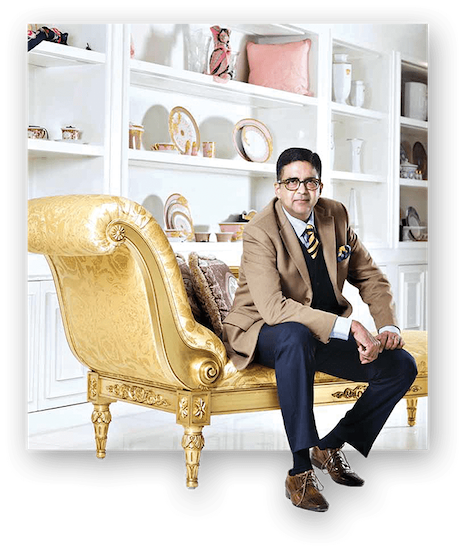 Abhay Gupta
Abhay Gupta is founder/CEO of Luxury Connect and Luxury Connect Business School, Gurgaon, Haryana, India. He is also author of “The Incredible Indian Luxury Bazaar.” Reach him at [email protected].