
 Art Basel exhibition entrance in Basel, Switzerland June 23, 2025. Image credit: Shutterstock
Despite prevailing geopolitical uncertainty, fragile international trade and economic volatility, a new survey highlights a community of art collectors that is younger, more diverse and increasingly confident in shaping the future of cultural value.
This year’s edition of The Art Basel and UBS Survey of Global Collecting offers a striking portrait of an art market at a decisive moment in its trajectory. Indeed, the 2025 report reveals how profoundly the landscape is shifting.
“Nearly three-quarters of respondents belong to the millennial and Gen Z generations, a demographic transformation that is reshaping the very nature of collecting,” said Noah Horowitz, CEO of Art Basel, in the report.
“Their choices and motivations differ markedly from those of previous cohorts, signaling not only a generational transition but also a diversification in taste, practice and engagement,” he said.
“At the same time, the visibility and influence of women in the market have never been greater, with female collectors leading spending in several regions and championing works by female artists at unprecedented levels.”
Six insights from The Art Basel and UBS Survey of Global Collecting 2025
How are collecting behaviors evolving amid shifting market dynamics? How are female high-net-worth individuals (HNWIs) shaping their influence? And how do the younger generations collect differently?
The Art Basel and UBS Survey of Global Collecting 2025 authored by Dr. Clare McAndrew, founder of Arts Economics, offers fresh insights into the evolving behaviors and motivations of high-net-worth (HNW) collectors.
The survey, conducted by Arts Economics in collaboration with UBS, draws on responses of 3,100 HNWIs through the first half of 2025 across 10 key markets: United States, United Kingdom, Mainland China, Hong Kong, France, Switzerland, Germany, Japan, Brazil and Singapore. It explores their preferences, spending habits, event attendance, motivations for collecting, and interactions with artists, galleries and institutions.
Here are six key findings from the survey, per Arts Economics, UBS and Art Basel:
HNWIs increased the share of wealth allocated to art in 2025
HNW Collectors allocated an average of 20% of their wealth to art in 2025, up from 15% in 2024.
Purchasing habits diversified across mediums, artist categories and buying channels
Paintings remained the most purchased medium and the largest by value.
The share of HNWIs buying at art fairs rose to 58 percent, while galleries and dealers remained the most used and highest spend channels.
The share of collectors engaging in Instagram purchases increased to 51 percent, and the share of those buying directly from artists more than doubled, as did spending via this channel.
While spending leaned toward established artists, 66 percent of HNWIs bought works by artists they had newly discovered, up 8 percent year-on-year and a notable rise from 43 percent in 2022.
Female HNW collectors showed higher spending levels and displayed new collecting tendencies
In 2024, women’s average spending on art and antiques was 46 percent higher than men.
In Mainland China, HNW female collectors led expenditure, averaging more than twice that of men.
Female HNWI’s collections included a higher share of works by female artists and greater openness to newly discovered talent.
Millennials and Gen Z showed the broadest cross-collecting appetites
Millennials led spending on decorative art, design and jewelry, reflecting lifestyle-driven interests.
Gen Z dominated in categories such as collectible handbags, sneakers and luxury assets, with average sneaker spending nearly five times higher than other groups.
In fine art, younger collectors engaged with a broader range of mediums, Gen Z had the highest activity rates in digital art, while millennials favored prints, photography and works on paper.
Family involvement remains central to collecting
Almost 90 percent of Gen Z collectors who had inherited works had kept them, underlining the importance of family traditions in building collections. Of all respondents across generations, 80 percent plan to pass their collections on to their children or spouses in the future.
Confidence in the art market’s short-term future
Looking ahead, 40 percent of HNWIs planned to buy more art in the next 12 months (down slightly from 43 percent in 2024 and 54 percent in 2023), and 84 percent remained optimistic about the short-term future of the global art market.
Selling intentions, by contrast, eased to 25 percent (from 55 percent in 2024).
A quarter also planned to donate works, continuing a broader trend toward philanthropic giving.
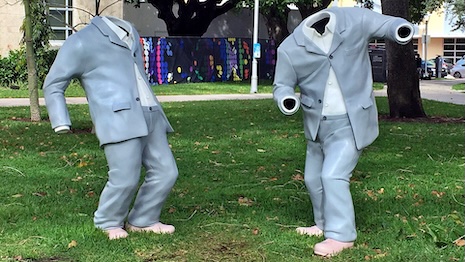 Art Basel Miami Beach 2017 exhibit on Jan. 13, 2017. Image credit: Shutterstock
Excerpts from The Art Basel and UBS Survey of Global Collecting 2025 report
Acknowledgements
The Art Basel and UBS Survey of Global Collecting 2025 presents the findings of new research undertaken by Arts Economics into the activities and behaviors of high-net-worth individuals (HNWIs) active in the art market over the last three years.
The information in this study is primarily based on survey data gathered and analyzed by Arts Economics (artseconomics.com) in collaboration with UBS.
A key focus of this research was to investigate if and how the gender of HNWIs may influence their preferences and behaviors in the art market, with women making up half of the 3,100 respondents to the survey.
I am extremely grateful to Tamsin Selby and her colleagues at UBS for their continued support of the HNWI surveys, and for our collaboration over the last decade to provide information and insights on collectors.
The report highlights contributions by two sets of external experts. I am very grateful to Till Vere-Hodge and Katalin Andreides who contributed their legal perspectives on collecting.
Very special thanks to Amy Whitaker (NYU) and Roman Kräussl (Bayes Business School) for their expertise and thoughtful insights on gender and risk in the art market.
Thank you also to Antonio Filippin (University of Milan) for his valued advice.
Lastly, I am very grateful to Noah Horowitz and the team at Art Basel for their assistance in publishing the report, and to Toby Skeggs for his help with editing.
Dr. Clare McAndrew
Arts Economics
Foreword by Art Basel
This year’s edition of The Art Basel and UBS Survey of Global Collecting offers a striking portrait of an art market at a decisive moment in its trajectory.
Despite prevailing geopolitical uncertainty, fragile international trade and economic volatility, the survey highlights a community of collectors that is younger, more diverse and increasingly confident in shaping the future of cultural value.
The 2025 report reveals how profoundly the landscape is shifting.
Nearly three-quarters of respondents belong to the millennial and Gen Z generations, a demographic transformation that is reshaping the very nature of collecting. Their choices and motivations differ markedly from those of previous cohorts, signaling not only a generational transition but also a diversification in taste, practice and engagement.
At the same time, the visibility and influence of women in the market have never been greater, with female collectors leading spending in several regions and championing works by female artists at unprecedented levels.
The digital shift is equally pronounced.
Collectors across all generations continue to embrace new formats and channels, with digital art emerging as a core category of acquisition and online platforms – including social media and direct-from-artist sales – becoming mainstream avenues for engagement.
These shifts underscore a growing comfort with fluid, hybrid modes of exchange and reflect the adaptability of both collectors and the art ecosystem that supports them.
What collectors buy, and why, is also changing.
The survey reveals a widening definition of connoisseurship, where art increasingly sits alongside design, luxury goods and lifestyle collectibles. This convergence highlights the blurring of traditional boundaries, as tastes evolve and migrate across categories.
For many, collecting has become an expression of identity, shaped as much by personal pleasure and social connection as by financial motivation.
Encouragingly, the appetite to collect remains strong.
High-net-worth individuals allocated a greater share of their wealth to art in 2025 than in previous years, with a substantial number planning new acquisitions and philanthropic contributions.
Galleries, meanwhile, remain the preferred channel for purchases, while art fairs recorded a slight increase in engagement, underscoring the continuing importance of in-person encounters.
As selling intentions also markedly softened year-on-year, these trends suggest a market that is stabilizing, maturing, and poised for continued evolution.
We would like to thank Dr. Clare McAndrew for her rigorous research and insights, and UBS for their enduring partnership. This survey continues to illuminate not only the resilience of the art market, but also the ways in which new generations of collectors are redefining its future.
Noah Horowitz
CEO, Art Basel
Key findings
In the first half of 2025, economic uncertainty and trade fragmentation were among the dominant concerns within the art market, with a slowdown in cross-border flows of art and antiques in some regions in 2024 and early 2025.
However, high-net-worth wealth maintained strong growth, and collectors continued spending across a range of art and collectible categories.
To assess how collectors are approaching today’s evolving cultural landscape, this Survey of Global Collecting presents the results of research carried out in mid-2025 on high-net-worth individuals (HNWIs) who are active in the art market.
Given the increased unpredictability in the global outlook, the report studies collectors’ attitudes toward uncertainty, assessing risk preferences and sensitivities with a special focus on how they might vary by age and gender.
The survey is the 12th in a series conducted in collaboration with Arts Economics and UBS. It now covers 10 markets, with responses from 3,100 HNWIs, including 1,575 women, and remains one of the largest surveys of high-net-worth collectors globally.
Wealth and allocations to art
1. HNWIs continued to allocate a substantial proportion of their wealth to their collections. In 2025, collectors allocated an average of 20 percent of their wealth to art, up from 15 percent in 2024.
Allocations rose with wealth: ultra-high-net-worth individuals (UHNWIs) with over $50 million in assets averaged 28 percent.
Allocations also rose with time spent collecting: 16 percent for two years or less, rising to 24 percent for more than 20 years.
Gen Z collectors also reported higher-than-average allocations, at 26 percent.
2. Inheritance was important for collections, with 84 percent of the HNWIs surveyed having inherited artworks, accounting for almost 30 percent of the works they owned.
Almost 90 percent of Gen Z collectors who inherited works kept them, underlining the importance of family traditions in building collections.
Overall, around 80 percent plan to pass their collections to their children or partners in the future and 70 percent hope to donate works to museums or charities.
HNWI spending on art
1. Despite the uncertain economic environment in 2024 and 2025, HNWIs spent a substantial amount on art and antiques.
Average spending in 2024 was $438,990 across an average of 14 works, with women spending 46 percent more than men. Ten percent spent over $500,000 and 7 percent spent over $1 million in 2024, with similar levels in the first half of 2025.
Median expenditure in the first half of 2025 ($22,000) almost matched the full-year 2024 median ($24,000), indicating continued activity by collectors across a range of price segments.
2. Boomers were the smallest segment in the sample, but reported the highest average spending in 2024 at nearly $993,000, followed by millennials at $523,000.
Women outspent men in both the Gen Z and millennial segments, while the reverse was true for Gen X and boomers. The highest spending by a considerable margin was from collectors in Mainland China, driven primarily by women whose averages were over twice that of men.
3. HNWIs diversified their spending in 2024 and 2025, buying across a wide range of mediums, artists and collecting categories.
Fine art was a key segment of expenditure, with 78 percent of the sample having purchased a work of fine art in 2024 and 74 percent in the first half of 2025.
Paintings remained the most-purchased medium and the largest by value, accounting for 27 percent of total fine art spending in 2024.
While the share of respondents buying paintings was down on 2023, other segments such as sculptures, photography and digital art saw higher take-up.
Boomers were the most active buyers of paintings; Gen Z collectors were the most active in digital art, and film and video art; and millennials in prints, photography and works on paper.
4. Digital art saw the biggest uplift in participation and spending.
Just over half (51 percent) of the HNWIs surveyed had bought a digital artwork in 2024/2025, and the medium ranked third in terms of spending, almost on par with sculptures (both at 14 percent).
Despite being characterized as risk-averse in certain areas of spending and investment, female collectors allocated a lower share of spending to traditional mediums such as paintings than men, and had higher shares of digital art and photography.
5. HNWIs’ openness to new discoveries rose, with 66 percent buying works by artists they had discovered for the first time in 2024/2025 (up 8 percent year-on-year and from a low of 43 percent in 2022).
A higher share of women was open to buying newly discovered artists (69 percent) than men (63 percent).
Across 2024 and the first half of 2025, there was a more diversified range of spending than the previous survey: 35 percent on works by new and emerging artists (down 17 percent year-on-year), 21 percent on mid-career artists, and 44 percent on established artists (up by 18 percent).
6. Women were much more likely to buy a work by an unknown artist.
Fifty-five percent of women reported buying works by unknown artists frequently or often (versus 44 percent of men), despite just over half of all respondents (52 percent) viewing this as a high-risk purchase.
In other words, while women are equally aware of the risks (and have a level of risk aversion on par with men), they still judge it as a risk worth taking when adding artworks to their collections.
7. Women collected more – and spent more on – works by female artists.
HNWIs’ collections remained dominated by male artists, with 44 percent of the works they owned being by female artists (up from 33 percent in 2018).
Female collectors came close to gender parity in their holdings: 49 percent of the works in their collections were by female artists, compared with 40 percent in men’s.
Women also spent more than men on works by female artists, averaging 47 percent of spending in 2024/2025, versus 41 percent for men.
Gen Z collectors spent more on works by women artists (45 percent) than their older peers, with boomers at 25 percent.
As wealth shifts vertically and horizontally, these trends could encourage more balance in the diversity of collections in future.
8. Despite a slowdown in some lower-end luxury segments, spending by HNWIs maintained pace across collectibles markets in 2025.
Considering combined spending on art and collectibles in 2025, 59 percent was on fine art, decorative art and antiques, and 41 percent on collectibles (including 10 percent on jewelry and gems, and 7 percent on classic cars, boats and jets).
Gen Z had the highest share of spending on collectibles (56 percent in 2025). Boomers were highest in fine art, antiques, and watches; millennials led in decorative art, design and jewelry and gems.
Gen Z had the highest averages in most other sectors including luxury collectible handbags; collectible sneakers (almost five times the level of any other generational group); classic cars, boats, and jets; and sports assets.
Sales channels
1. Galleries and dealers were still the most used channels for buying art among HNWIs.
Eighty-three percent bought at a gallery in person, online, through social media, or at an art fair in 2024/2025 (down from 95 percent in 2023).
Among those who purchased from a dealer, 51 percent had made at least one purchase via Instagram without viewing the work in person (up from 41 percent in 2023).
Art fairs gained ground, with 58 percent of collectors making purchases linked to fairs (up from 39 percent in 2023).
2. As well as being the most frequently used sales channel, HNWIs also spent the most through dealers in 2024/2025.
Forty-three percent of the value of transactions made by HNWIs was through dealers (either directly or at art fairs), down from 60 percent in 2023 and more in line with the 46 percent in 2022.
Dealers were also the most-preferred sales channel in 2025 (30 percent preferred to buy directly and 15 percent at art fairs), followed by buying directly from an artist (20 percent). This was consistent across generations, apart from boomers, who preferred auctions.
3. Participation and spending at auction fell.
Around half (49 percent) of the HNWIs surveyed made a purchase at auction (down from 74 percent in 2023).
By value, auctions accounted for 12 percent of spending in 2024/2025 (down from 23 percent in 2023).
Men spent more at auction than women (14 percent versus 10 percent).
4. The share of HNWIs engaging in direct sales with artists expanded: 43 percent bought from artists’ studios; 37 percent commissioned works; and 35 percent purchased via Instagram links.
In line with this uptick, artist-direct sales were the second-largest area of spending by value in 2024/2025, accounting for 20 percent of the total – more than double the level reported in the previous year’s survey – with women allocating a higher share than men.
Events
1. Event attendance continued to stabilize, with HNWIs averaging attendance at 48 art-related events in 2024 (down from 49 in 2023 but more than the 41 in 2019).
Women went to more events than men in 2024, and plan to go to more in 2025 (52 versus 44 for men).
2. On average, HNWIs attended 14 museum exhibitions in 2024, with a similar 13 planned for 2025.
Attendance numbers for gallery exhibitions and art fairs were relatively stable at seven and six, respectively, with both seeing an uptick compared to a smaller sample of similarly screened HNWIs in pre-pandemic 2019.
Artist studio visits saw the greatest rise in attendance, from five in 2019 to seven in 2024 and eight planned for 2025.
3. Nearly all respondents (96 percent) plan to attend art events in 2026, with 48 percent hoping to attend more than in 2025.
Younger collectors were more likely to increase event attendance (56 percent of Gen Z respondents versus 49 percent of millennials and 36 percent of boomers).
Outlook and buying plans
1. Looking ahead, 40 percent of HNWIs planned to buy more art in the next 12 months (down slightly from 43 percent in 2024 and 54 percent in 2023).
Selling intentions, by contrast, eased to 25 percent (from 55 percent in 2024), suggesting greater market stability.
A quarter also planned to donate works, continuing a broader trend toward philanthropic giving.
2. Almost half of those with buying plans hoped to buy a painting, with other popular sectors including sculpture (37 percent), digital art (23 percent) and photography (21 percent).
There was a substantial increase year-on-year in those hoping to buy design and collectible items, with 37 percent planning to buy antiques; 33 percent decorative art; 32 percent jewelry and gems (double the share reported in 2024); and 27 percent watches.
Gen Z collectors had the most active buying plans across nearly all collectibles, including around a third planning to buy watches, design works, or collectible wine, whisky and spirits.
3. While geopolitical and economic concerns dominated in 2025, collectors’ specific concerns for the art market were anchored on a few main issues, including barriers to cross-border trade; art market fluctuations; transparency; legal issues; and the security of personal information when purchasing art online.
However, most HNWIs surveyed remained positive about the future of the global art market: 84 percent were optimistic about the market’s performance for the rest of 2025 (down from 91 percent in mid-2024), while 81 percent were optimistic about the next 12 months.
Please click or tap here to download The Art Basel and UBS Survey of Global Collecting 2025 report