
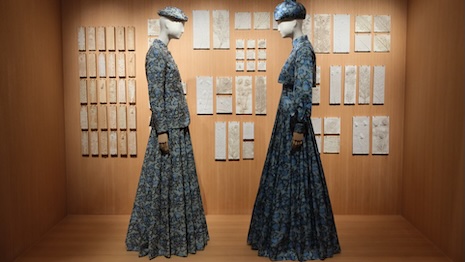
 Loro Piana is one of the most respected cashmere brands worldwide. Seen here: Mannequins in window display at a Loro Piana store in Shanghai, China
The luxury business’ No. 1 challenge currently is customer acquisition and retention – as much the case for luxury real estate and hospitality as it is for luxury goods and services.
The situation is even more acute this year as geopolitical issues, U.S. tariffs and nonstop negative media headlines roil the economic order as we know it.
While I’ll have more to say later on what I think is a flawed luxury business model, my immediate thought to the acquisition-and-retention question is simple: how will these brands grow if their value proposition – and worth – is no longer as clear to more skeptical and less enamored consumers? Do consumers think the emperor has no clothes?
Sweating it
Let’s focus on a few sectors to give us an idea of what’s causing a retraction in demand.
First off the bat is credibility. Jaws dropped when Italian authorities put the famed Loro Piana brand – my personal favorite label – under administration in its home market for its outsourcing practices to sweatshops. You can read more about the kerfuffle on the Web, but it certainly dinged Loro Piana’s credibility when we found out that its cashmere sweaters were being manufactured for a few dollars from sweatshops with dubious labor practices and then retailed for thousands of dollars.
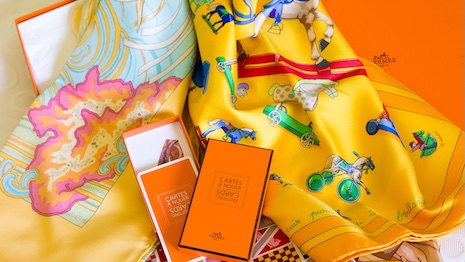 Hermès consistently bucks the market with consistent growth due to its focus on quality, creativity and the strong loyalty of its returning upscale clientele
Likewise was a segment on U.S. broadcaster CBS’ 60 Minutes program that interviewed an Hermès executive who went on to say that the French brand did not have a marketing department and did not artificially create a waitlist for the famed Birkin bag.
Now who could credibly believe those claims when Hermès advertises in most prestigious print publications, has an effective social media, website and PR strategy, sponsors events and runs online ads? These activities all fall under the purview of marketing, whether you put them under a marketing department or not. Again, there is the credibility factor.
Now Hermès is more fortunate than most of its peers in that it has a reliable book of return business from clients who buy the brand’s message and focus on quality and creativity.
But brand rivals from the LVMH, Kering, Richemont and Chanel families are not that lucky since many consumers suspect that luxury has become a triumph of marketing over product quality, scale over rarity, and pricing over value.
Not surprisingly, LVMH, Kering and Richemont have reported weak quarterly sales for the past year. Kering’s Gucci has even shed the most customers among its peer billion-dollar-plus brands.
It’s easy to blame anemic Chinese demand, import duties on European products entering the U.S., slowing travel and weak sales in Europe, North America and Asia, bar the Middle East.
The real question to ask is: why is there slowing demand? Have we borrowed from the future? Is luxury consumption fatigue setting in? Is the message being viewed as inauthentic? Do luxury brands think aspirational and wealthy consumers are chumps to repeatedly accept ridiculous price hikes?
Getting real
I see the same issue rearing its head in another industry in which I’m involved: luxury real estate.
Why have sales of luxury properties in some markets slowed and in others stayed stable and even grown? Why is it that certain properties on the same street have buoyant sales while others report stagnant numbers? Are the impacted properties viewed as overpriced? Have the professionals selling those properties recalibrated to adjust to the market, or are they holding on to a quaint notion that the market will reach the same pandemic heights as they did in 2021?
In my opinion, 2021 is the wrong year to benchmark against, both for luxury real estate as well as luxury goods and services – the boom was the result of sales pulling from the future, cooped-up customers buying online, and easy money from the global stimulus to keep economies, companies and consumers afloat.
Demand-and-supply issues will always dominate in good times or bad. But to encourage demand, you need to stimulate desire. That desire has to be rooted in reality and authenticity.
Prospects and customers don’t want to be taken for a ride, especially the wealthy who have mostly slogged for every penny they’ve earned. Their skepticism radar is on full blast.
Luxury real estate professionals, like their counterparts in luxury goods and services, have to be tuned to the mood of the market, read the room and adjust accordingly.
Employers, whether luxury goods and services firms or brokerages, have to use this opportunity to upskill their executives, teams and associates, and motivate them to drum up new business from new and existing clientele.
All key signifiers of luxury – quality, rarity, craftsmanship, authenticity, heritage, creativity and value – have to be taken seriously if luxury sales are to return to strong growth.
I’m convinced the winning formula for the future is high touch, high tech, high cred – and not one at the expense of the other.
IF YOU ASK ME, luxury is in a bit of a trust deficit with the end customer.
The only road back for the luxury business and its professionals is to return to its roots of quality over quantity, authenticity over marketing, relationships over superficiality. A true luxury brand or professional understands that, in this segment, less is more.
To acquire and retain customers for the long term, generating desire has to trump creating demand – if you understand the distinction. Desire can only be generated if the item or service rendered is perceived as high quality, exclusive and slightly out of reach or, simply put, not commonplace or mass market. For a luxury good or luxury service, the devil is in the details.
I’m reminded of a comment made many years ago by Coco Chanel: “Luxury is a coat that a woman throws over an armchair, inside out … and the inside is more beautiful than the outside.”
Mickey ALAM KHAN is CEO of events producer and networking platform Luxury Roundtable and marketing and upskilling agency Luxboro. Reach him at [email protected].