
 Sabyasachi, known for its deep focus on craftsmanship inspired by the country's heritage, is one of India's most well-known luxury brands with a global clientele
By Abhay Gupta
WHITE PAPER
Crafting a global identity rooted in heritage, sustainability and craftsmanship is essential to reimagining Indian luxury.
The global luxury business has long been dominated by Western maisons —brands that have mastered the art of storytelling, craftsmanship and exclusivity.
While India has always been a cradle of luxury — offering exquisite textiles, jewelry, architecture and artisanal mastery — it has lacked a unified identity that resonates globally.
Here, this white paper explores how India can redefine luxury by embracing its deep-rooted heritage, sustainability and craftsmanship, creating an Indian-rooted equivalent to the Western maison.
Historical context: India’s legacy of sustainable luxury
Before industrialization and colonial economic shifts, India was the epicenter of global luxury trade.
The country exported fine muslins, intricate brocades, handcrafted jewelry and artistic home décor to royal courts across Europe, Middle East and Asia.
The Indian luxury model was inherently sustainable, based on decentralized production, generational craftsmanship and eco-friendly materials.
- Textile mastery: Muslin from Bengal, Banarasi silk, Pashmina from Kashmir
- Jewelry and gemstones: Jaipur’s gemstone expertise, temple jewelry traditions
- Luxury architecture and interiors: Havelis, palaces and hand-carved furniture
- Perfumes and incense: Attars of Kannauj, sandalwood-based fragrances
Unlike the mechanized luxury production of the West, India’s luxury was rooted in slow craftsmanship, making it more personal and exclusive.
The Western maison vs. the Indian luxury model
In the West, the term maison denotes a luxury house with in-house craftsmanship and creative mastery.
However, in India, luxury brands have largely been positioned as 'brands' rather than heritage-driven houses of excellence. This distinction has prevented Indian luxury from being perceived at par with its Western counterparts.
Why India needs its own nomenclature:
- Maison implies industrial precision; India’s model is artisanal mastery
- Indian luxury is community-driven, unlike the designer-led Western model
- An Indian-rooted term could differentiate homegrown brands in global markets
Possible alternatives to maison that reflect Indian heritage could include:
- Shilp Griha (House of Craftsmanship)
- Ratnaalaya (Abode of Precious Creations)
- Aarohana (Ascent to Excellence)
- Kalaadhishthana (Sanctuary of Art)
Sustainability and craftsmanship as luxury pillars
With sustainability becoming a central theme in luxury, India is uniquely positioned to lead this transformation.
Unlike fast luxury, Indian craftsmanship has always been rooted in natural dyes, organic textiles, handloom weaving and waste-free production.
Key differentiators of Indian sustainable luxury:
- Handcrafted over mass-produced: Every piece tells a story
- Natural, biodegradable materials: Silk, cotton, jute and gemstone embellishments
- Fair trade and ethical labour: Empowering artisans, not factories
- Cultural sustainability: Reviving dying crafts such as Pichwai painting, Bidriware and Chikankari
Beyond fashion: Expanding the scope of Indian luxury
While fashion remains a core pillar, true Indian luxury extends beyond textiles.
Brands must embrace a holistic ecosystem to create an entire luxury lifestyle offering.
Jewelry and watches
- Promoting India’s unparalleled expertise in goldsmithing, minakari and gemstone setting
- Shifting from 'commodity jewelry' to exclusive, handcrafted heritage pieces
Luxury home and décor
- Positioning handwoven carpets, carved furniture and Mughal-inspired architecture as premium home décor
- Reviving the lost art of royal interior design
Perfumes and well-being
- Re-establishing India as the world’s leading attar and Ayurvedic wellness hub
- Blending traditional perfumery with modern luxury branding
Experiential luxury
- Promoting boutique palace stays, craft-based travel and Ayurveda retreats
- Creating exclusive, invite-only cultural experiences for high-net-worth individuals
Creating the Indian ‘maison’ equivalent: A strategic roadmap
For Indian luxury to compete on a global scale, it must create an ecosystem that mirrors the prestige of European houses while staying true to its roots.
Key strategies:
- Luxury houses, not just brands: Positioning high-end labels as shilp grihas — houses of artistic mastery
- Limited, bespoke and heirloom-quality products: Moving away from mass-market appeal
- Artisan-centric branding: Elevating master artisans as ‘couturiers’ of their craft
- Storytelling and provenance: Creating rich brand narratives around heritage and authenticity
- Global Indian clientele focus: Catering to non-resident Indians (NRI), luxury tourists and the rising Indian elite
Indian brands leading the way
- Good Earth: Blending heritage with modern Indian luxury lifestyle
- Sabyasachi: Elevating Indian couture to global luxury status
- Jaipur Watch Company: India's first heritage-oriented luxury watch brand
- Bangalore Watch Company: A homegrown luxury watch brand merging Indian narratives with Swiss precision
- Amrapali Jewels: Reviving Indian heritage jewelry craftsmanship with a global presence
- Taj Hotels: Synonymous with luxury hospitality, blending Indian tradition with world-class service
- Forest Essentials: Positioning Ayurveda as a luxury skincare experience
Future of Indian Luxury: The path ahead
As India reclaims its space in global luxury, the key to success lies in:
- Defining a unique Indian luxury philosophy instead of imitating Western models
- Building an ecosystem of high-end, craftsmanship-led brands that cater to both Indian and international clientele
- Educating the market on why ‘Made in India’ luxury is an unparalleled value proposition
Conclusion: India’s moment in luxury
Indian luxury has all the ingredients to emerge as a powerful global force.
By redefining its positioning, embracing its heritage and crafting an identity that is both sustainable and exclusive, India can create a new paradigm of luxury that stands alongside the world’s greatest maisons — on its own terms.
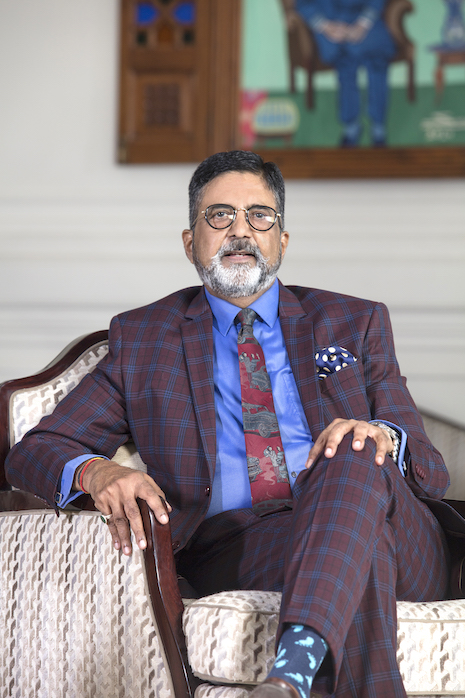 Abhay Gupta
Abhay Gupta is founder/CEO of Luxury Connect and Luxury Connect Business School, Gurgaon, Haryana, India. He is also author of “The Incredible Indian Luxury Bazaar.” Reach him at [email protected].
This whitepaper serves as a blueprint for India’s luxury sector to evolve beyond ‘brands’ into true houses of excellence.